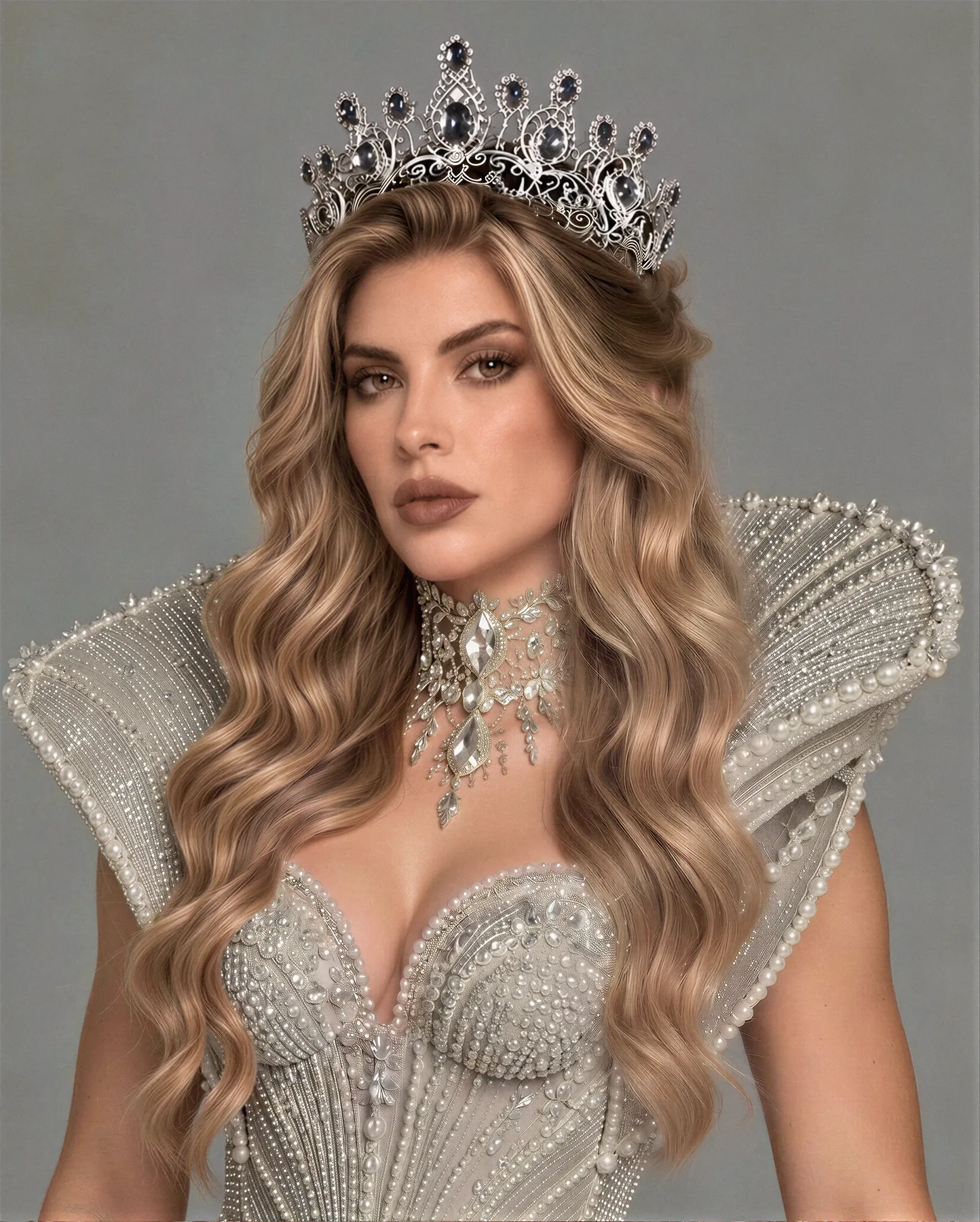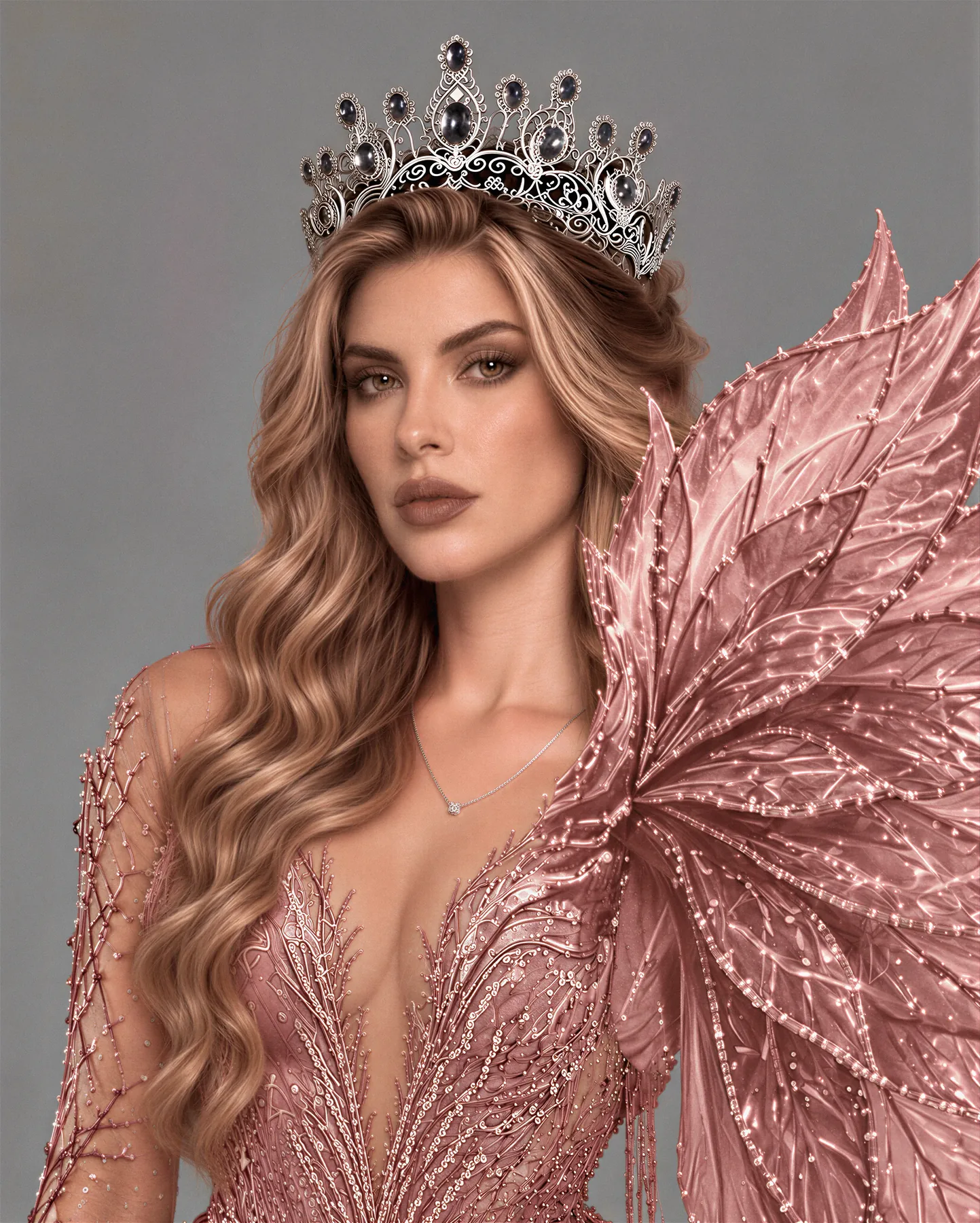
An AI photobook is a fashion photo book produced with artificial intelligence instead of a traditional studio shoot. It works for a model who needs a portfolio, a beauty queen presenting herself to sponsors and press, a clothing store that needs its garments shown on a model, or a manufacturer that wants a catalog without staging a full production. In every case it has to look like a magazine shoot, and the person has to look like themselves on every page.
Producing it the traditional way means coordinating a photographer, a studio, a makeup artist, a hairstylist and a wardrobe that often exists for a single occasion. This article is built on a real case: a complete photobook for a beauty queen, produced at PIXEL AI-STUDIO in Bogotá, Colombia. The interesting part is not that it can be done; it is what was hard, because the same challenges show up in any AI fashion book.
What is a photobook
and who needs one?
A photobook (or modeling book) is a curated selection of images that shows a person's range in front of the camera: the serious editorial portrait, the open smile, close-ups and full-length shots in different outfits. It is the piece sent to agencies, designers, sponsors, press and clients.
That is why it matters less that each photo is beautiful and more that they all look like one production and one person. That is where AI gets difficult.
Who is an AI photobook
for?
- Models and aspiring models: portfolio, comp card and agency book with the same face and the same look in every photo, without depending on a single studio date.
- Beauty queens and pageant contestants: the case shown here. A photobook for sponsors, designers and media, with evening gowns and fantasy costumes.
- Clothing stores and fashion brands: lookbook and on-model product photos with the garment worn by a virtual model, for social media, online stores and campaigns. If you start with the garment alone, see our AI catalog photography and ghost mannequin service.
- Apparel manufacturers: a catalog to show the collection to buyers and distributors, without booking models, a studio and a photographer for every style.
- Fashion designers: a visual record of a collection or a signature piece, even when the garment is complex or still a prototype.
The three challenges
of the project
1. Facial consistency
Generating one spectacular image with AI is easy. Generating eight that look like they were shot on the same day, of the same person, is a different problem. Image models do not store a person: every generation is a new interpretation. Without identity control, subtle drift appears (the shape of the eye, the curve of the lip, the height of the cheekbone) and viewers feel that "something changed" even if they cannot say what.
In a photobook the risk is higher because poses force changes of angle: serious portrait, smile, three-quarter view, a look over the shoulder. Every angle is a chance for the face to drift.
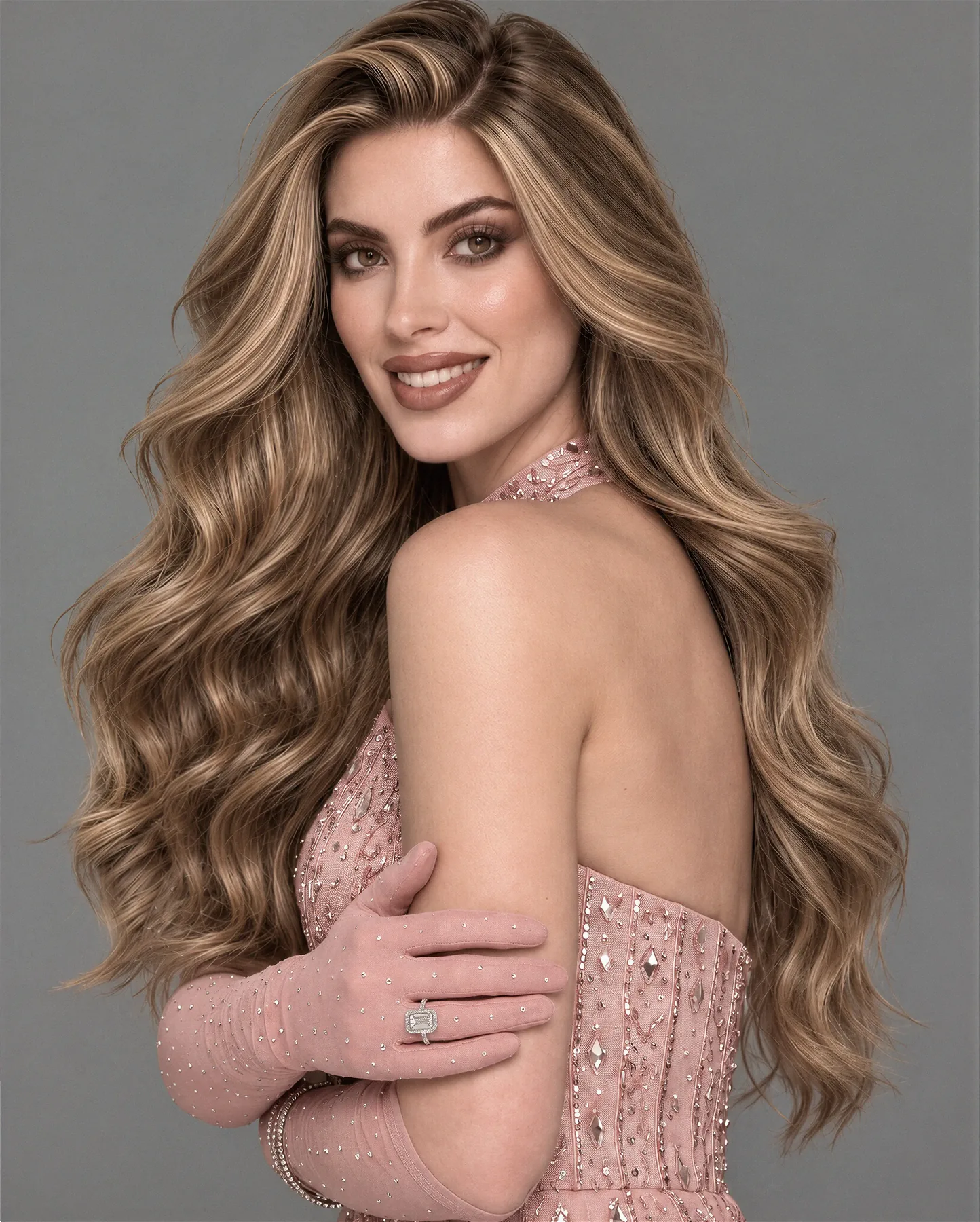
2. The look: hair, makeup, light and background
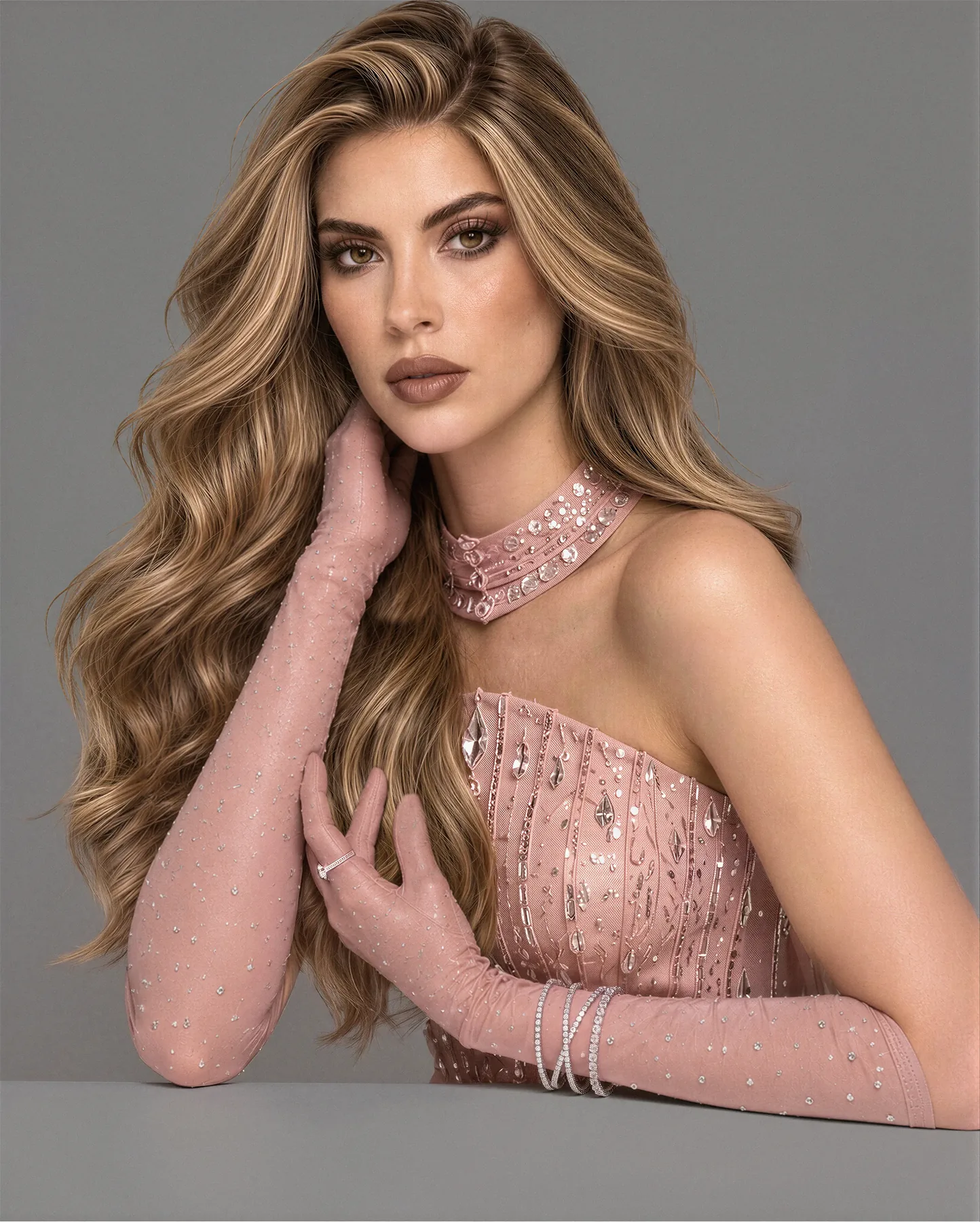
A consistent face is not enough. The full look (long wavy hair with highlights, smoky eyes, matte nude lips, the same skin texture) has to hold across every shot, together with the light and the grey studio background that tie the series together.
Hair actually tends to drift before the face does: length, wave or highlight tone change. If that happens from one photo to the next, the photobook stops looking like one session and becomes a collection of loose images.
3. Wardrobe complexity
Beading, pearls, crystals, tulle, patterned embroidery, sculptural shoulders, petal wings. This is exactly the kind of detail where AI tends to invent: embroidery turns into a smudge, beading changes shape between shots and structures lose physical logic.
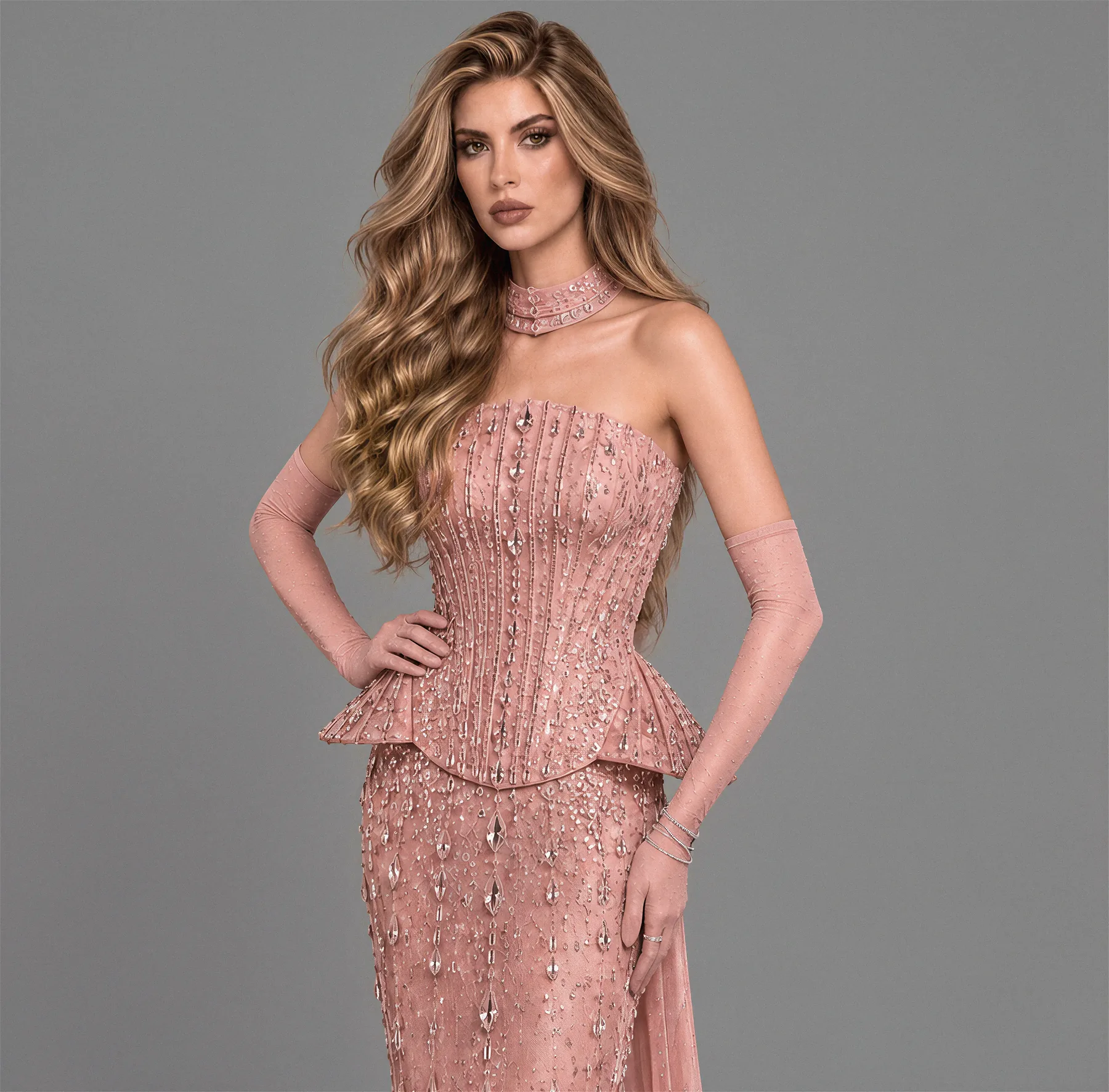
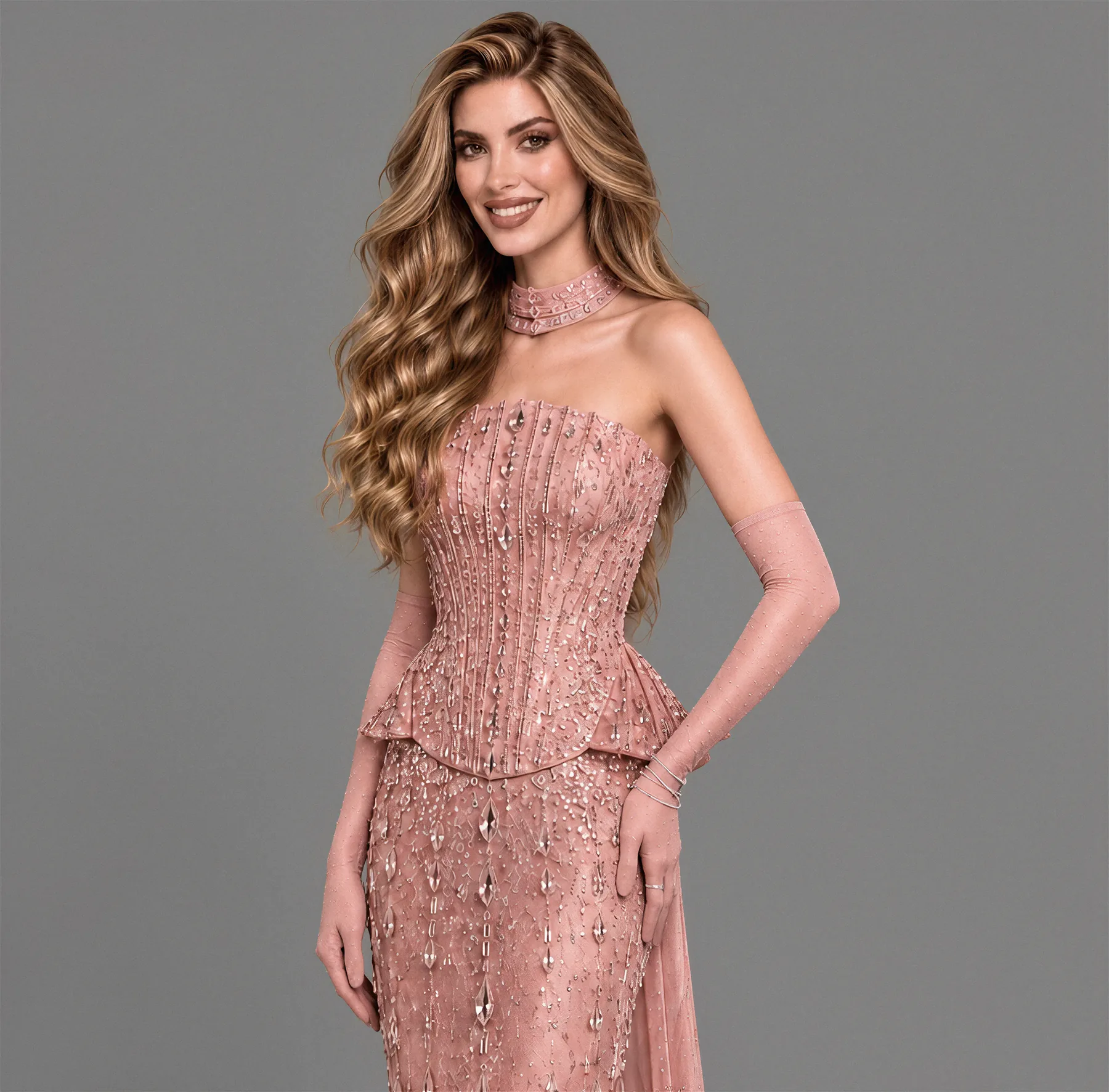
The wardrobe also had to repeat consistently. The same pink gown appears in several poses with its corset, gloves, choker, bracelet and ring; the same crown and the same fine necklace accompany different looks.
Evening gown or fantasy costume?
A difference that matters in a photobook
Many beauty pageants distinguish two registers of formal wardrobe. The evening gown is the full-length formal piece, judged on elegance, fit, drape and presence. The fantasy costume (often called the national costume) is a conceptual outfit usually inspired by a country's culture, nature or symbols, and it plays with volume, structure and spectacle.
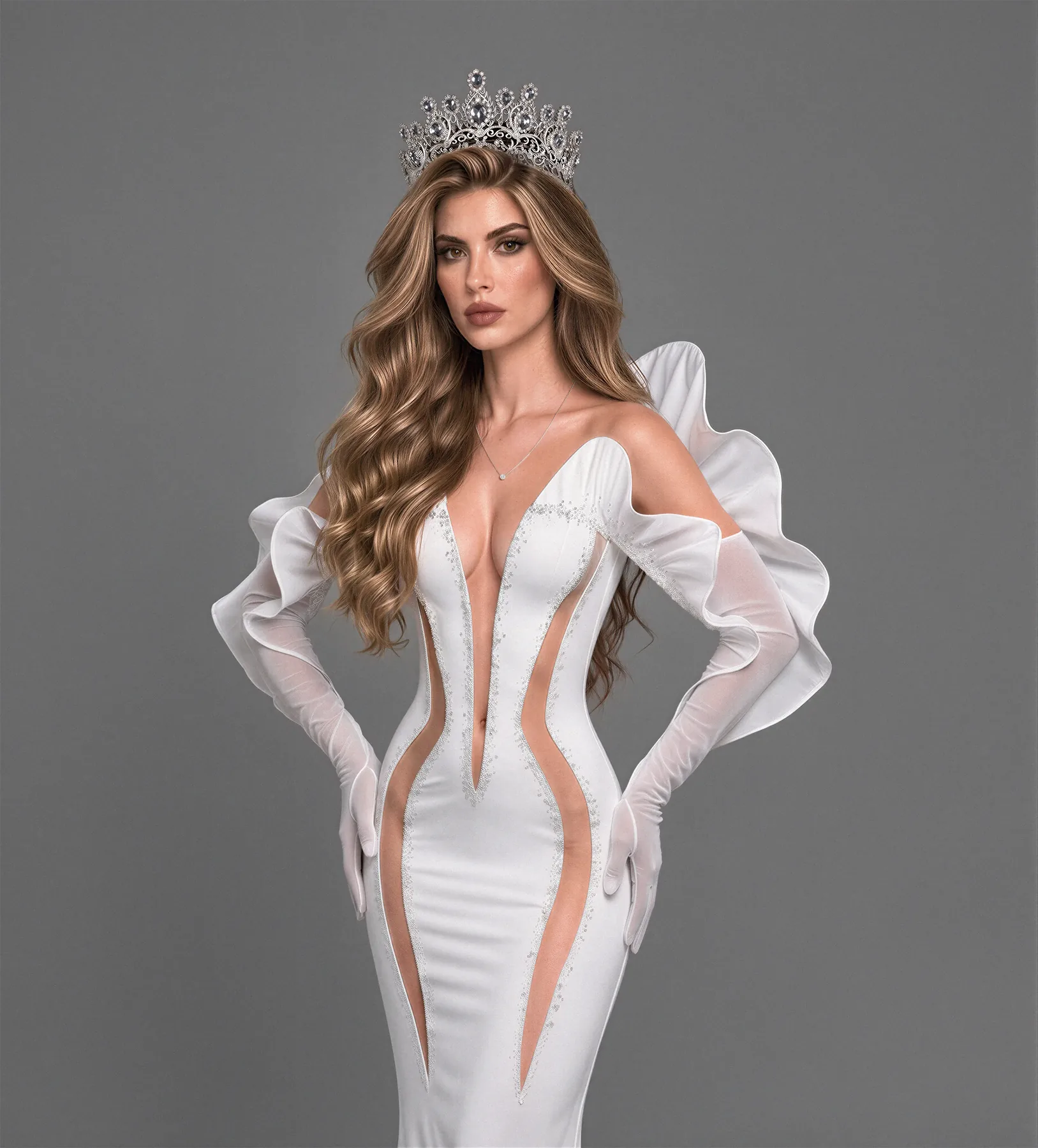
In this photobook the line between them is porous. The pink corset gown with peplum and the white gown with sheer cut-outs and ruffled sleeves are evening pieces: fitted silhouette, long drape, couture finish. The looks with pearl shoulder pieces, a burgundy petal wing or a structure of branches and pink wings lean toward fantasy: sculptural pieces designed to make an impact from a distance.
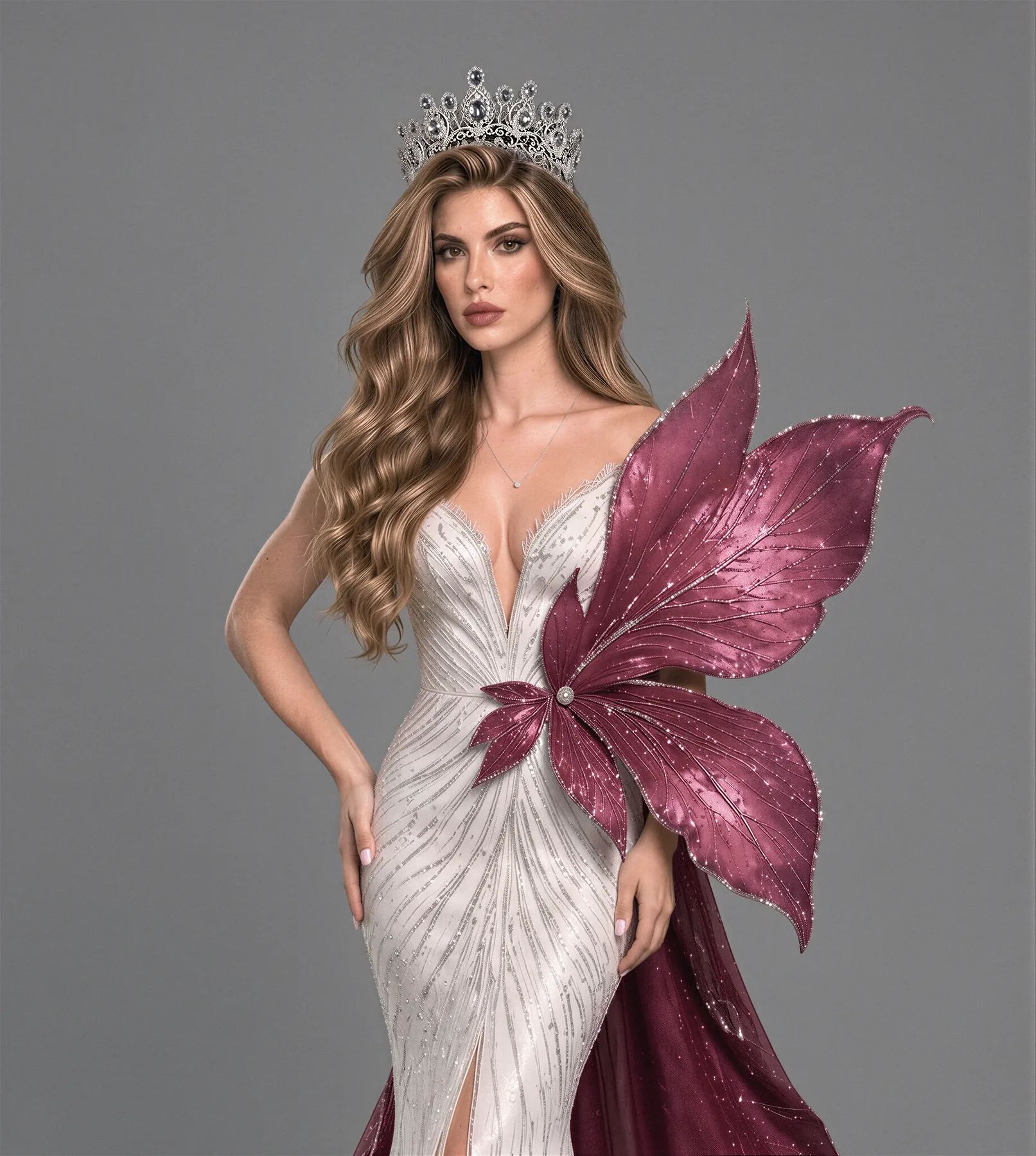
For AI the difference is not just vocabulary: the risk changes.
- In an evening gown the risk lies in the drape of the fabric, the fit to the body and the repetition of embroidery from one pose to the next.
- In a fantasy costume the risk lies in structural logic: how the piece holds itself up, how it attaches to the body and how it looks from another angle.
How we approached it
at PIXEL AI-STUDIO
A photobook is not solved by a single tool that "does everything". As in our catalog workflows, PIXEL AI-STUDIO combines specialized models with human review. For a project like this, the non-negotiable criteria are:
- Identity first. The face is defined and approved before it is dressed: everything else is built on that reference.
- One fixed base look. Hair, makeup, light and background are set once and reused across the whole series.
- Wardrobe piece by piece. Each gown is handled as its own project, with its palette, materials and structure, so detail stays consistent between poses.
- Human review against the reference. Every image is compared with the approved face and look before delivery; anything that drifts is redone.
- Uniform finish. The same color and skin treatment on every image, so the series reads as one session.
What changes
for your team and your production
With a well-directed AI workflow, the photobook no longer depends on a single shoot date: you can adjust a look, try another outfit or add a pose without bringing the whole team together again. The client, the brand team and the designer can review proposals before deciding. For a store or a manufacturer, the same workflow can be repeated with every new style in the collection.
On the use of real faces: at PixelArt a real person's face is only used with their authorization and with a clear agreement on where and how the images will be used.
If you need a photobook for yourself as a model, for a pageant contestant, for your clothing store or to present your factory's collection, see our AI fashion photography service or message us directly on WhatsApp.